Originally published on Companioning Center.
Listen
To what can I compare this generation? They are like children sitting in the marketplaces and calling out to others:
‘We played the pipe for you, and you did not dance;
we sang a dirge, and you did not mourn.’
(Matthew 11:16–17, NIV)
What is your favorite work of art? A painting, perhaps, or a piece of music, or a film that has stayed with you?
I struggle to choose favorites, but a few come to mind: the film Tree of Life with its epic scope and poetic unfolding, the choral music of Eric Whitacre with its tight harmonies and transcendent melodies, the architecture of Antoni Gaudí—stepping into the Sagrada Familia was like entering an entirely different world of light, color, and a paradoxical earthy transcendence.
Perhaps you have your own work of art that has taken you on a similar journey.
What all of these works of art have in common is a sense of contrast. Films unfold at a variety of paces, often with a slow-moving first act and an action-packed finale. Music has a similar pattern, such as Beethoven’s famous Fifth Symphony, beginning with a sudden strike that gives way to quiet movement. And of course, paintings require the contrasts of light, shadow, and color to give form to their shapes—otherwise they would simply appear as a great grayish blob.
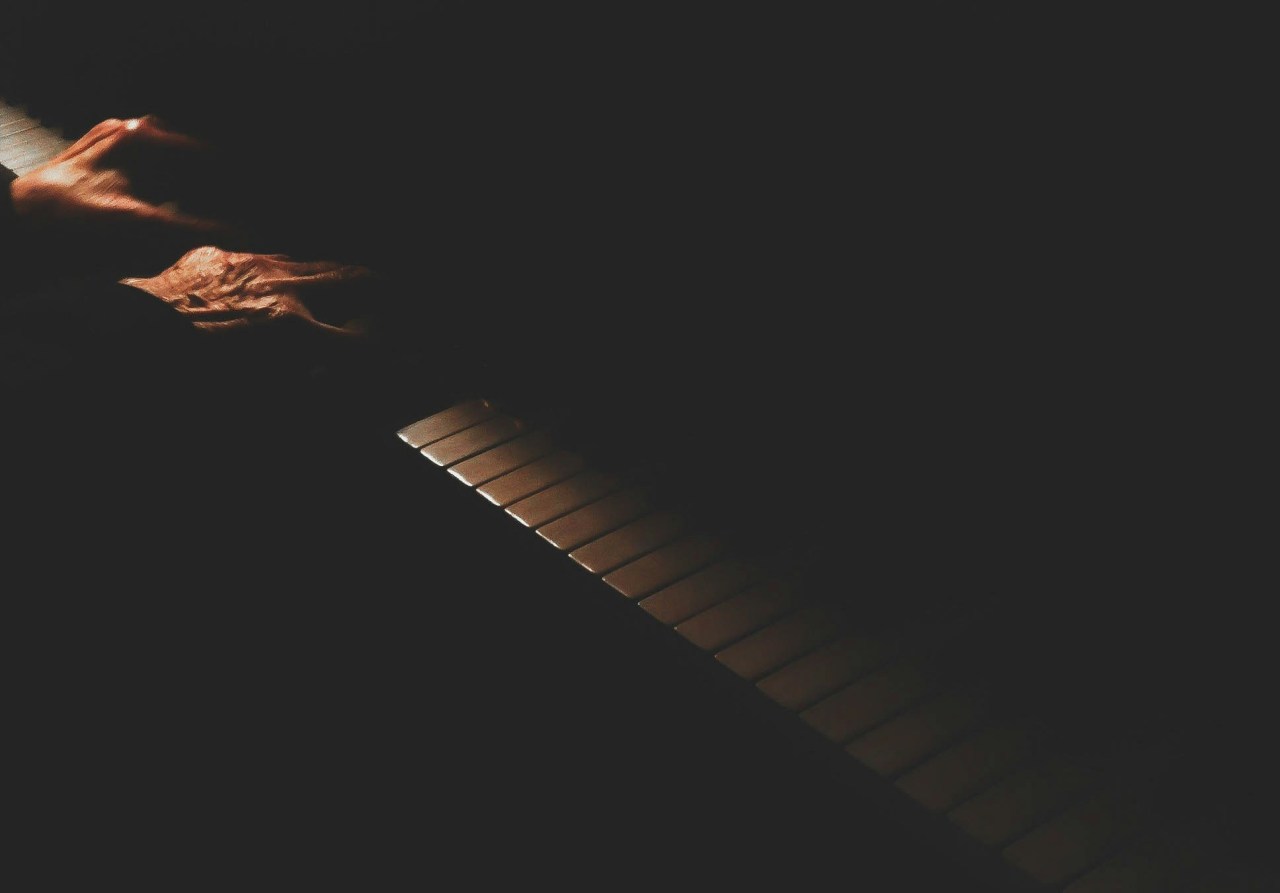
There is a term for how this appears in visual art: chiaroscuro. It refers to a particular technique that emerged during the Renaissance, in which artists used shading and shadow to bring out dimension and depth to their paintings. da Vinci, Caravaggio, and Rembrandt are known masters of chiaroscuro. The term itself comes from Italian and literally means “light-dark” (chiaro = light, scuro = dark). Another Italian term that captures this same principle is pianoforte, the original name for the piano. The instrument got its name because it could be both soft (piano) and loud (forte)—a breakthrough in musical engineering that enabled far more expressive composition by composers such as Beethoven and Mozart.
These works reveal a truth: Beauty calls for contrast. Beauty is not light or dark, loud or soft, fast or slow, but the interplay of all together.
Just as paintings have contrasts and music has dynamics, so time has seasons.
This week, we enter the season of Lent—a quieter, darker, slower season in the calendar of faith. Its sights are gray ashes and empty wilderness. Its sounds are smoldering flames and winds upon rough sand. Its sense is somber as it makes its forty-day journey toward death.
Then will come the season of Easter with its sights of sunrise and new blossoms, its sounds of “Hallelujah!”, and its sense of wonder as it stretches out fifty days of resurrection celebration.
Together, these ninety days are a kind of chiaroscuro, a pianoforte, inviting us into greater fullness and beauty in our life with God. They are the dirge and pipe of Jesus’ parable.
Jesus used this image of dirge and pipe to describe those who did not respond—neither to John the Baptist’s austere wilderness ministry nor to his own celebratory village presence—because of their hard hearts. Today, we face a similar challenge. Though hard hearts remain, our hearts are also deluged with overstimulation. In our saturated environment, loud and soft mix into a constant hum of noise, and light and dark blur into an endless scroll of input, while our hurried lives and harried attentions grow numb to beauty itself.
So perhaps this season is an invitation to reacquaint ourselves with the light and shadow, the melody and harmony, the tragedy and comedy of our spiritual lives. Just as artworks and seasons call for contrast, so too does a beautiful life.
What are the dim and quiet parts of your life that need attending to? What do you need to grieve? Where do you need healing? Lent offers a time to pause, reflect, and pray.
What bright and melodious parts of your life long to be awakened? What goodness is there, waiting to bloom? What resurrection in you might already be stirring, ready to be named and celebrated? Easter will offer an opportunity to name the life that God is bringing and welcome it more fully.
As you journey through these coming seasons of darkness and light, tragedy and comedy, consider engaging works of art that can accompany you along the way. Let me offer a few resources to get you started:
- Book: The Wood Between the Worlds: A Poetic Theology of the Cross by Brian Zahnd – A collection of essays taking a “theopoetic” approach to the cross through art, film, and literature.
- Poetry: Word in the Wilderness – An anthology of Lenten poems with commentary by Malcolm Guite, a renowned modern poet whose own work and blog are well worth exploring.
- Film: Soul on Screen Podcast – Conversations exploring truth, beauty, and goodness in film (full disclosure: I’m part of these conversations and would love for you to join us).
- Art: The Art of Lent and The Art of Holy Week and Easter by Sister Wendy Beckett offer daily paintings with meditations. Also recommended: the Visual Commentary on Scripture.
- Music: For Lent – After Silence by Voces8. For Easter – Appalachian Spring by Aaron Copland. For ongoing music recommendations – The Rabbit Room and Holy Ghost Record Club.
 Drew Dixon
this reminded me of your article, especially the end. love you.
https://wepresent.wetransfer.com/stories/gustavo-nazareno-painting-candomble?utm_source=wetransfer&utm_medium=wallpaper&utm_campaign=wp_article&utm_content=ver2